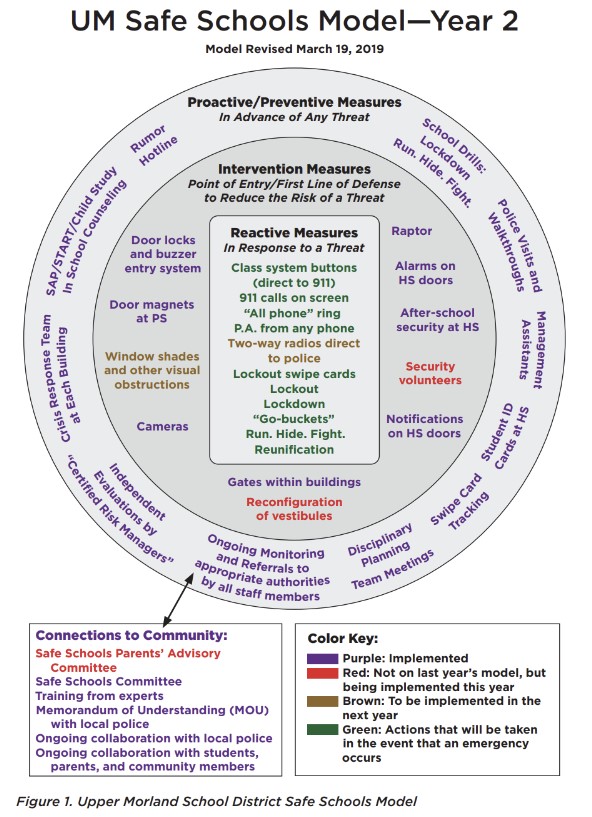
The outer ring of the model contains 11 proactive and preventative measures that the Upper Moreland School District has implemented in advance of a threat:
- School drills: lockdown and Run. Hide. Fight.
- Police visits and walkthroughs
- Administrators in each building assigned to student safety and security
- Identification cards for students
- Identification tracking of students riding buses
- Disciplinary planning team meetings
- Ongoing monitoring and referrals to appropriate authorities by all staff members
- Independent evaluations by certified risk managers
- Crisis response teams at each building
- Student assistance program and student services, including counseling
- Rumor/safe schools’ hotline
These measures may vary for other school districts according to their unique traits.
The next ring in the model contains intervention measures that serve as a point of entry or first line of defense to reduce the risk of a threat:
- Alarms on exterior doors to prevent and restrict use from the main entrances
- Gates within buildings to restrict access
- Reconfiguration of entry vestibules for safety and security
- Cameras on the interior and exterior of buildings
- Buses linked to the police department
- Window shades and other visual obstructions
- Door locks, buzzers, entry system modifications
Finally, to respond to a threat, the district has the following reactive measures:
- Emergency buttons that connect directly to 911 services
- Ability to turn any hardwired phone into an intercom
- Two-way radios connected to the police
- Run. Hide. Fight protocol
These measures are illustrated in the center of the model illustration.
Collaborative Approach
The proactive and preventative, intervention, and reactive measures are all built from research-based best practices and the district’s individual needs assessments for safety and security and are supported by the district’s connections to the community. These connections include (1) parent advisory committees, (2) an internal safe schools committee, (3) staff training from experts, (4) memorandums of understanding with local police, and (5) ongoing collaboration with students, parents, police, and community members.
For example, as in many other school districts, Upper Moreland’s buildings are used after school hours for student and community events. Providing security for these events was cost prohibitive for nondistrict groups. Providing after-school security for nondistrict groups was an unreasonable expense for Upper Moreland to assume; therefore, the district developed a hybrid model whereby volunteers from nonstudent groups were trained in security measures. These individuals serve as points of contact for safety issues and are stationed at accessible after-hours entrances to monitor activities and to ensure that the building remains secure.
This safe schools model is not static; it is built into the district’s daily operating structure. In addition to regular team meetings involving internal and external stakeholders, the following activities take place district-wide to provide information, training, consultations, and recommendations on identified safety and security matters for the school environment:
- Review and update the district’s multihazard emergency operation plan
- Review and update off-site evacuation plans
- Review and update the parent–child reunification plan
- Conduct emergency drills and exercises, including an after-action review and corrective action recommendations
- Develop and provide training as needed on school safety and security topics associated with current best practices and regulatory mandates
- Complete site safety and security assessments of school buildings and facilities
- Conduct incident after-action debriefings
The supports developed in Upper Moreland’s model not only enable a shared responsibility for safety and security, but also recognize that safe schools are not just the responsibility of central office or building leaders; they are a shared responsibility that goes beyond the school day and involves all stakeholders.
Additionally, this model is flexible; it can be reviewed and adapted on the basis of improvements to best practices or input and feedback for enhanced security. For example, based on feedback, the model was modified during the second year of implementation to clarify the role of security volunteers and to enhance measures for sight and safety in buildings.
Keys to Success
Each district’s safe schools model should reflect its individual needs and align with district goals and objectives. Recognizing use patterns and undergoing a risk assessment are just two of the critical steps in establishing a safe schools model. Communication is also key to ensuring that internal and external stakeholders are on board and understand the measures that have been developed and are being used. Follow-up surveys can assess progress.
Five years into Upper Moreland’s enhanced security model, internal stakeholders believe the district’s buildings are safer and staff members are better informed about the risks and the actions employed to mitigate them.