The district is a relatively small PreK-8 district that educates about 500 students in two schools: Brook Forest Elementary and Butler Junior High. The district’s administrative team includes the superintendent, two principals, the director of student services, and the director of building and grounds. They are supported by an executive assistant, business coordinator, registrar/system specialist, and assistant to the building and grounds director.
Butler 53’s succession plan was founded on four goals:
- Streamline the administrative services that are reflected in standard operating policies and procedures.
- Build what SIGMA calls a “succession bench” that focuses on the growth of current personnel to improve the retention rate of district personnel who embrace the Butler 53 way of supporting families, staff, and students.
- Create and maintain a succession model for specialized services, such as special education, gifted and academically talented, and English learners, to support a greater depth of knowledge for everyone.
- Require cross-training and cross-licensing in operational tasks for all administrative-level employees to comply with the emergency operations plan.
 A goal of the succession plan is to ensure a safe and healthy learning environment for students and staff.
In a collaborative effort, the district’s administrative team and board of education worked together to support all elements of the succession plan through a multiyear approach. The investment in time and resources ensured stabilization, retention, and financial savings.
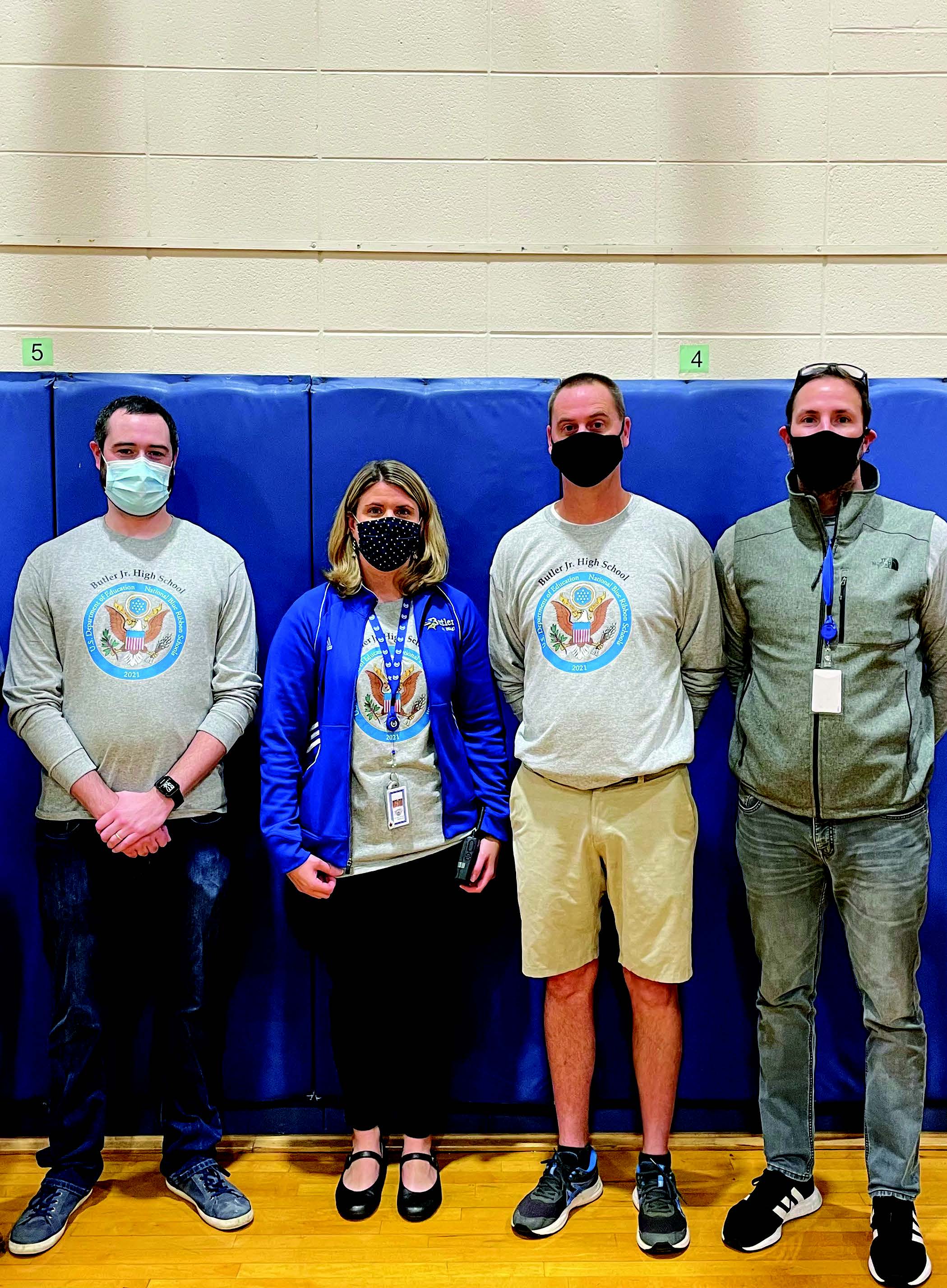 The Butler 53 administration team cross-trains to comply with the emergency operations plan.
Developing the Succession Plan
During the first year of plan development, district leaders gathered information from employees who had the necessary knowledge about key positions to build a sustainable succession plan. District leaders considered who would fill positions if necessary and what targeted professional development they would need based on that plan.
The second year focused on streamlining administrative services relative to the standard operating procedures and policies, including creating and maintaining a succession model for specialized services. Key components of the succession plan concerning operations included absorbing contracted services such that:
- The superintendent served as the school business official.
- A full-time assistant principal took responsibility for curriculum and instruction.
- A building principal took on additional district-level duties, including human resources functions.
These components provided additional areas of responsibility for the administrative team and fueled their interest in growing professionally.
The primary focus of the third year was to cross-train and cross-license all administrative-level employees and to ensure that routine operational tasks aligned with the emergency operations plan (EOP). The EOP was key to District 53’s response to COVID-19, resuming in-person instruction in fall 2020, and maintaining a healthy and safe school environment for teachers, staff, and students.
In addition, the administrative positions were adjusted to merit-based contracts, which was a school board expectation.
The succession plan allows for a cycle of continual improvement and quality, making a stronger, more efficient administrative team. The plan ensures a smooth progression and serves as a building block that strengthens the district and allows for personal development while covering all four transitional tenants.
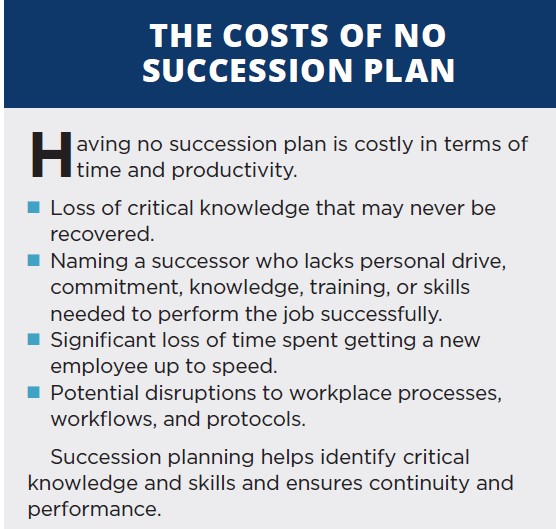
Implementing the Succession Plan
In the summer of 2021, the elementary school principal unexpectedly resigned to take a position in another district. In response, the superintendent and board of education looked to the succession plan that had been approved and adopted.
The plan called for a seasoned administrator who held a dual role as director of student services and junior high school principal to transition into the singular role of principal at the elementary school. The junior high school principal position was earmarked to be filled by the assistant principal for curriculum and instruction.
In light of the vacancy, the board of education followed the plan and, as a result, retained highly qualified administrators and stabilized the continuity of district operations and learning initiatives within the respective schools.
The succession plan also warranted the hiring of a director of student services. The district made this hiring decision based on its intention to prepare the new employee for subsequent roles within District 53.
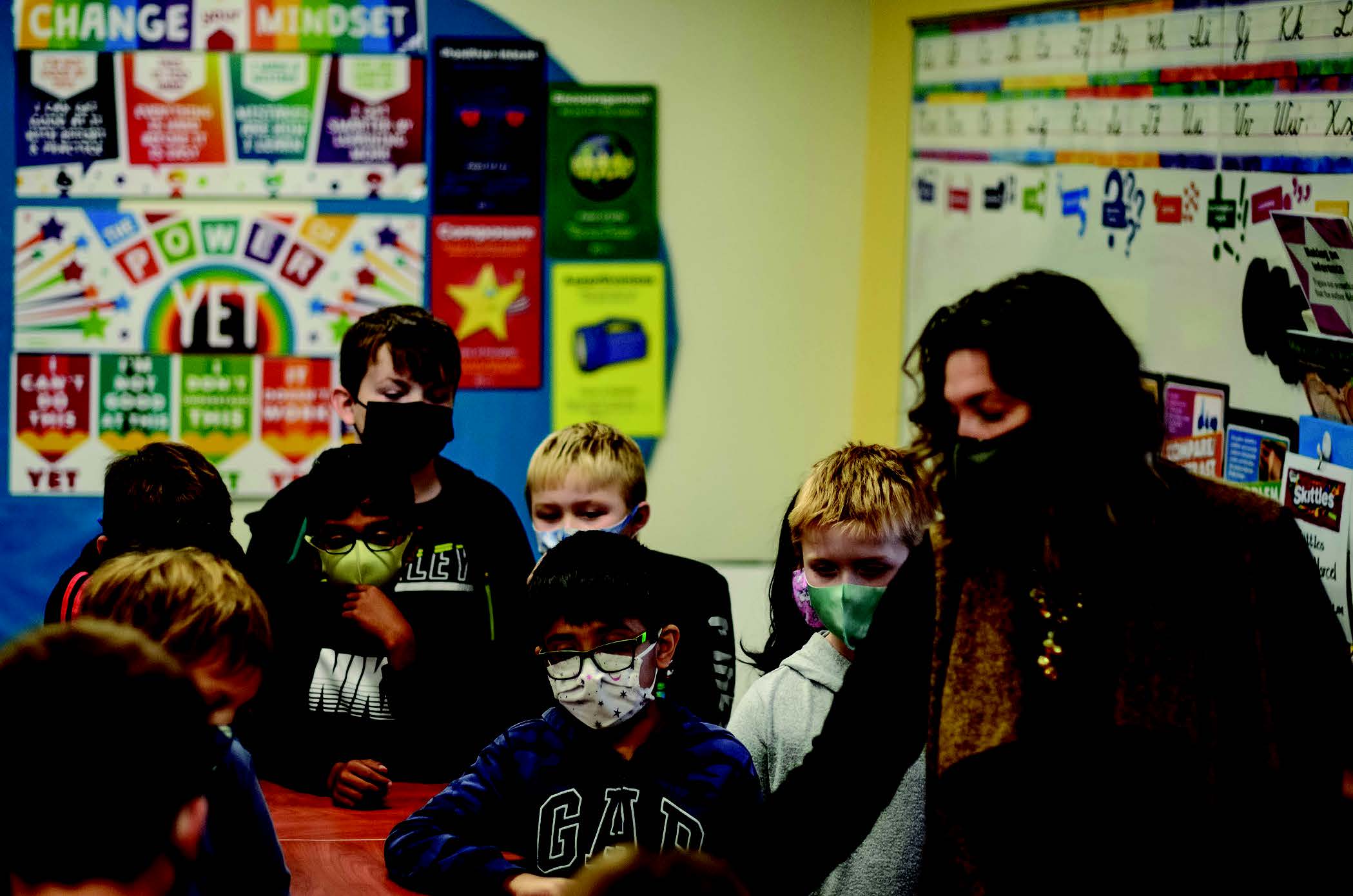 Succession planning helps the district ensure continuity and high performance.
Financial Impact
By determining the most efficient use of in-district personnel and external contractors, District 53 saved more than $250,000 in administrative expenses. As part of the implementation of this succession plan, the district replaced a vacant director of technology position with the services of an external company that manages all of the technology infrastructure and educational technology support, which resulted in cost savings.
In addition, based on subsequent administrative team certifications, the board of education and the superintendent, based on, decided not to fill an assistant superintendent for innovation and instructional practices position.
Developing a district succession plan is an important strategy for retaining administrators, showing them a path for growth within your school district, and responding to changing circumstances. While the financial impact is noteworthy, our primary driver was the recruitment and retention of talented administrators who care about District 53 students and families.