To be most effective, an EMS should be based on some form of the energy conservation pyramid, a concept developed at Penn State University. The bottom of the pyramid comprises simple energy conservation steps that control usage. The next layer consists of energy efficiency steps, and the top of the pyramid consists of renewable energy sources (Figure 1). This article will focus specifically on levels 1 and 2.
Base Layer: Control Usage
The bottom layer of the pyramid, the most basic level, outlines the first steps that should be taken in any energy use program. Much of this entry level of energy control and conservation is simply education—teaching and training staff to be energy aware and proactive in conserving it.
The Conejo Valley Unified School District in California has adopted the philosophy “Use what you need, be reasonably comfortable, and when you’re done, turn it off.”
Turning off equipment when it’s not needed is the key to this basic level of conservation. Sites and equipment should be shut down, to one degree or another, every night, every weekend, every holiday, and during every school break. Summer breaks are especially fertile grounds for energy savings. Most often, these measures can be made with little or no expense, but they offer considerable returns in savings.
Mechanical and electrical controls can regulate usage. Timers on outdoor lighting, smart thermostats, or controls that manage both scheduling and temperature set points are good examples of easily implemented measures. However, we have found that timers or motion sensors on classroom lighting are not as effective as instructing teachers to turn off the lights whenever they leave the classroom. Classroom light motion sensors typically have a 10-minute delay, whereas a teacher’s turning off the lights happens immediately.
You can better control what you can measure. Good energy data tracking software is imperative. Data can be gathered from bills and meter readings, as well as from the electrical utility. These types of data are called “interval data” and give electrical usage for each meter in 15-minute intervals with records of the past several years. Sites should be audited routinely, with after-hours walk-throughs.
With information from all these sources, districts can identify “hot spots” and make prompt, informed decisions about reducing energy consumption and improving energy efficiency. Collecting good data makes it possible to perform meaningful analyses to identify and mitigate problems.
Heating, ventilating, and air-conditioning (HVAC) equipment, especially air-conditioning, is by far the most significant electricity user on most campuses. Next is lighting and then such equipment as pool pumps. This equipment should be shut down whenever it’s not in use. Shutdowns typically occur every night, on weekends and holidays, and during school breaks.
Understanding Utility Costs
To best understand the timing for equipment shutdowns, you must first understand how the electric utility billing works. Every electric bill has two parts: energy used and demand. The energy used is simply the total electrical energy, in kilowatt-hours, used in that billing period— typically 30 days. A one-kilowatt hair dryer used for one hour uses one kilowatt-hour of power.
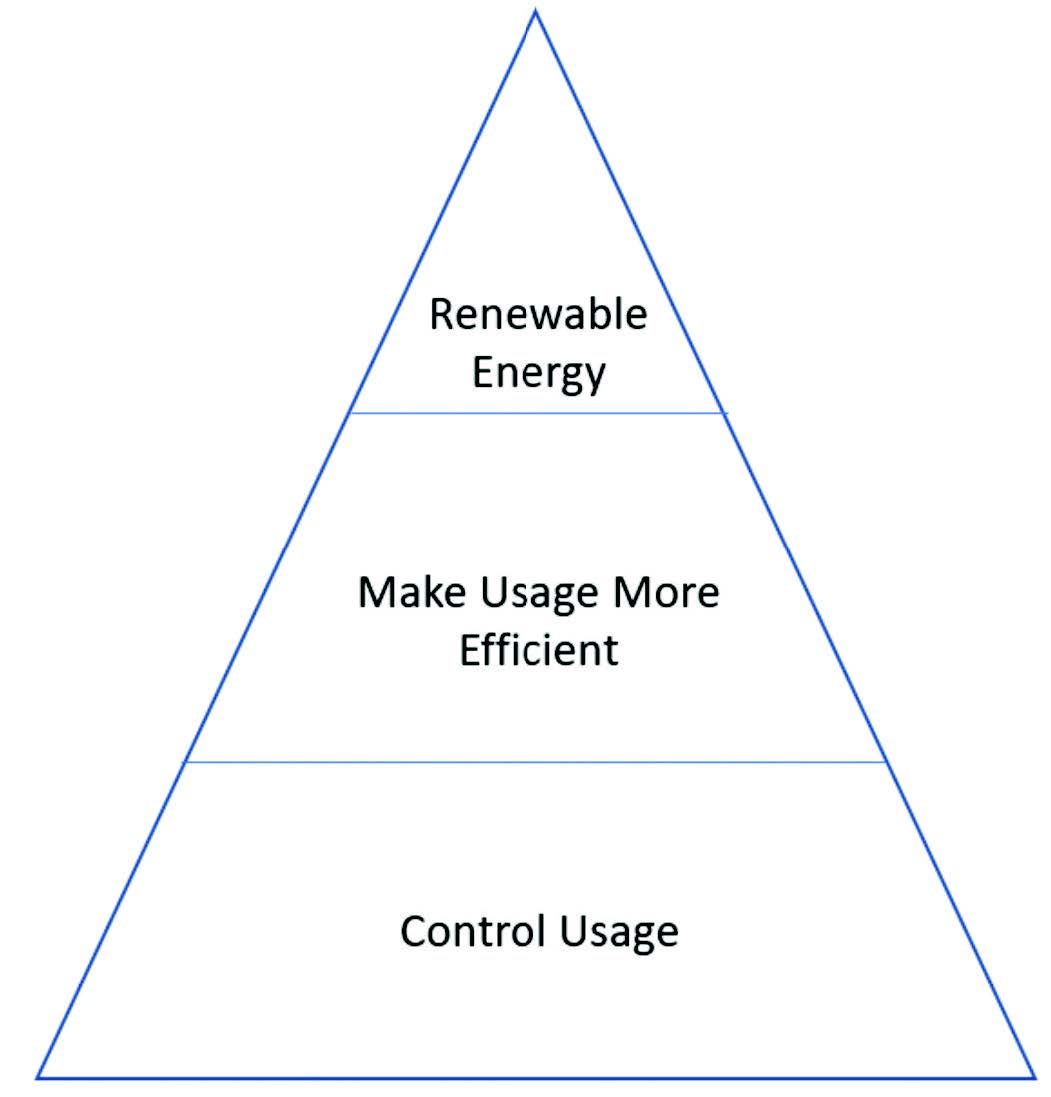 Figure 1. Energy conservation pyramid.
Demand charges are far more subtle. The electric utility measures usage every 15 minutes for the entire billing period and charges for the largest value of usage in a 15-minute increment. The demand charges can be a significant part of the bill, often more than half the total cost. The rationale is that the utility can never predict the “demand” for any given amount of electricity at any time, and to meet that demand, it must charge accordingly.
Knowing the billing dates can be valuable when scheduling school breaks, especially summer breaks. It would be very costly, for example, to start up schools after a summer break on the last day of an otherwise low-demand billing cycle (see Figure 2) or to end the school year on the first day of a billing cycle that would otherwise be a low usage month.
Electrical rates also vary with the time of day and season. Rates are highest between 4:00 p.m. and 9:00 p.m. and highest from June through September. It is, therefore, advantageous to shut down as much equipment as possible before 4:00 p.m.
Summer breaks are ripe with opportunities for substantial savings. The rate structure for demand charges must be kept in mind, however. Equipment shutdown must be done judiciously. Turning on electricity once for just a few minutes during a shutdown can be costly; 15 minutes or less can set the demand rate for the billing period and create significant charges.
Although an EMS can be as simple as using Wi-Fi connected thermostats and sensors, it can also be complicated and proprietary, and may require a significant capital outlay and training. The system may also have a long return on investment and be heavily reliant on internet connectivity and software reliability.
Regular maintenance is essential and has an up-front expense. Using a proactive work order system is vital for creating an efficient preventative maintenance program; while tracking repair history, it also feeds data collection on systems. Although not integrated into an EMS, it is a critical component and may require additional costs, training, and labor. An ancillary benefit, however, is that an effective work order system can help improve customer service and track the workforce’s productivity.
Mid-Level Measures
Mid-level measures involve making current usage more efficient. That usually means changing, modifying, or adapting equipment that is already in use. An analysis should determine the savings, the payback time, and the practicality of the project.
HVAC equipment should be controlled by either smart thermostats or an EMS. The controls should prevent heaters and air-conditioners from running when no one is present. That can be accomplished with scheduling, motion sensors, or push-to-start technology. Maximum and minimum set points for cooling and heating should not be adjustable by the user.
Most, if not all, lights on campus should be LEDs. LEDs offer noticeably better lighting at a fraction of the usage cost. An added benefit is their longevity; many LEDs are guaranteed for five years or more. Outdoor lighting should be programmed to operate automatically.
Large motors, such as those for pool pumps, can be fitted with variable-frequency drives. These devices act as an electronic speed control on engines and can be programmed to slow down motors when their total capacity isn’t needed.
Pool pumps can often be turned down during evening hours, offering considerable savings while still meeting health requirements and codes. The energy used by a motor varies with the cube of the motor speed, so slowing it down even a little can result in significant savings. For example, lowering a motor’s speed by 25% will reduce the cost of running it by 58%.
Tank-type water heaters can be replaced with on-demand flash heaters. This type of water heater uses gas or electricity only when the unit is turned on manually for a limited time.
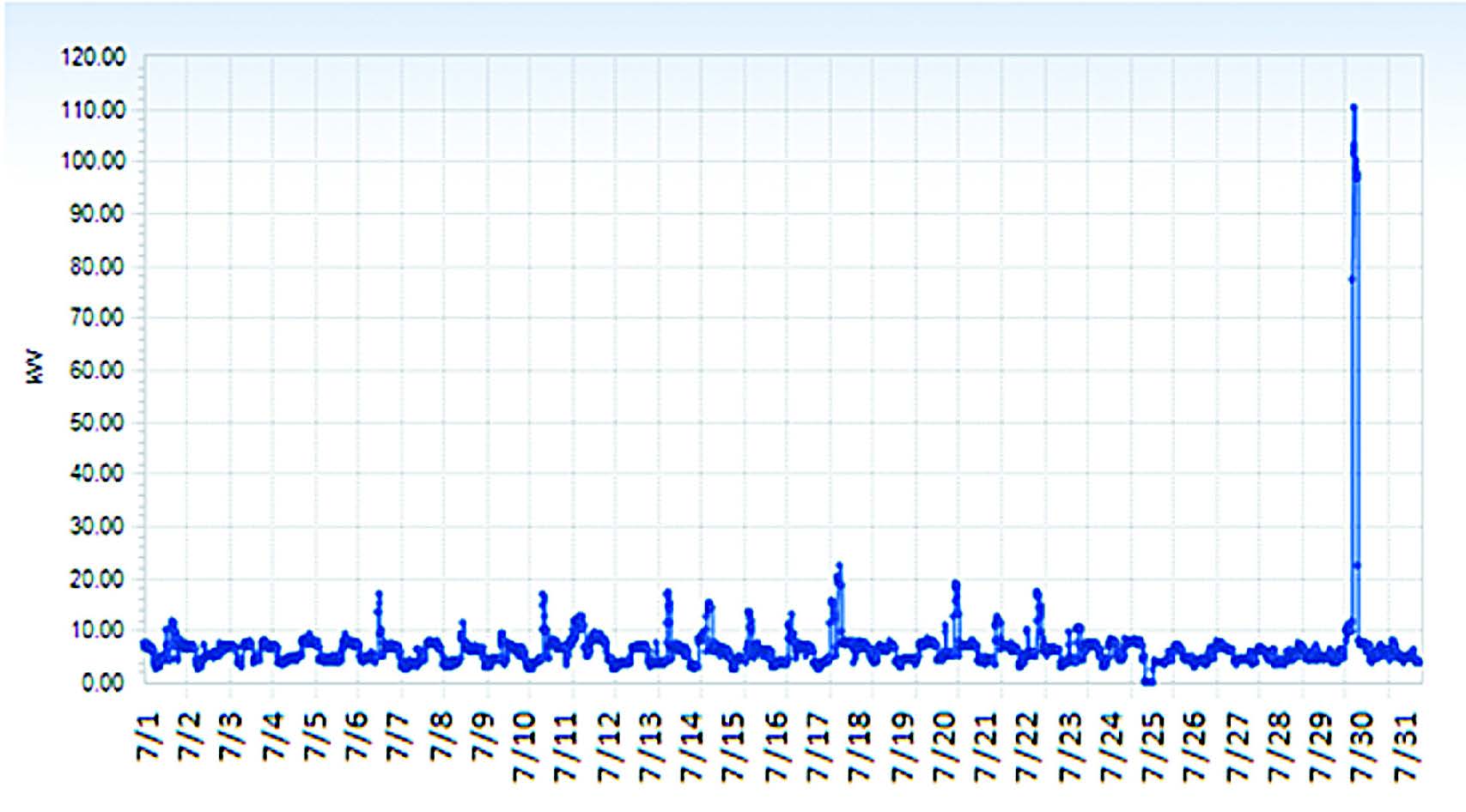 Figure 2. Electrical usage versus days for an entire billing date. Unfortunately, equipment was activated on the penultimate day of the billing period, setting a very high demand charge for the entire month.
High-capacity battery units can be installed to change demand timing to when the rates are lower. The batteries can charge during the day when the rates are lowest and run equipment after 4:00 p.m. when the rates go up. This, of course, is a major project.
Top-Level Measures
The last series of measures should be implemented only when a solid energy conservation and efficiency foundation is firmly in place. This level typically includes solar panel installation, which involves careful analysis and further discussion.
Summary
An energy management system can improve the efficiency of a school’s energy systems, leading to better use of resources, longer equipment life, and a more comfortable learning environment for students and staff.
Communication is critical for effective energy management, as it promotes teamwork and collaboration. Communication can also identify opportunities for training and new technological advances that support energy-efficient systems and practices and, in turn, reduce energy costs and save money.
Implementing an energy conservation program can be accomplished on many different levels and with various levels of commitment. School districts that use the concept of the energy conservation pyramid as a guide will increase their chances of successful energy management.