Supply chain issues have caused delays for many sectors of commerce, but they are not the only challenges.
Construction Management Options
Your choice of project delivery method and its management will play a key role in the success of your next project. Here are some options to consider:
Design-bid-build. The design-bid-build method involves three main players: the owner (the school district), the architect/engineer, and the contractor. This model uses two contracts: the first is between the owner and designer, and the second is between the owner and contractor. The final choice of contractor is typically based on the low bid or best perceived value.
Construction management at-risk. An alternative method is construction management at-risk. With this approach, the project is separated into two components: design and construction. The construction manager, who is frequently a general contractor, advises on both the design and construction phases of the project to ensure that the costs remain below a set maximum. If the project estimate exceeds the determined limit, the construction manager may be liable for expenditures that go over the agreed on amount. A challenge with this delivery method is that decisions are often made with an eye toward cost rather than value and quality. Additionally, transparency is usually lacking with such items as bids, equipment rental costs, and subcontractor markups.
Design-build. The design-build approach involves two key parties: the owner and the design-build entity. A single contract covers both the school district and the contractor or the architect, who is accountable for both design and construction.
Integrated project delivery. A method that is increasingly in demand is integrated project delivery (IPD). This methodology requires a single, multiparty agreement and entails a single source of responsibility that eliminates finger-pointing, intensifies accountability, and streamlines the building process. Furthermore, this approach heightens the interaction between the school personnel, project stakeholders, planners, architects, and construction managers throughout the course of the project.
IPD often adds a layer of assurance by requiring all parties (architects, designers, constructors, etc.) to contractually accept their stake in the risk and responsibility.
An Industry Shift
During the past few years, the construction industry has progressively realized the value of using an integrated process like design-build and IPD. In fact, traditional general contractors are steadily transitioning to construction management models. Some general contractors no longer consider design-bid-build. This change suggests that owners are finding that a collaborative process works well for all parties and provides value beyond traditional contracting methods.
Districts must put the best and the most experienced team on the field to make the project successful.
Integrated processes offer the opportunity to fast-track, to be creative, and to increase project collaboration, according to Paul Trombitas, a senior consultant with Fails Management Institute, a consulting and investment banking firm. That value is clearly heightened during today’s challenging times.
Why an Integrated Approach
A collaborative construction process can significantly benefit districts on their next project. The IPD and design-build approaches emphasize brainstorming, collaboration, communication, planning, and consensus building. At the beginning, all involved parties are encouraged to look—with the most peripheral vision possible—for sensible and timely solutions to all matters, including those we are currently experiencing with supply chain issues, staffing shortages, and increased costs.
Several crucial considerations need to be realized:
- Delaying a response to the current construction environment until the time to bid will be too late.
- Engaging subcontractors early on will help alleviate labor challenges by lining up projects on their schedules well in advance.
- Designs may need to be altered to incorporate materials and systems that can be obtained when you need them.
- Adjustments must be made as soon as possible to keep the project on budget.
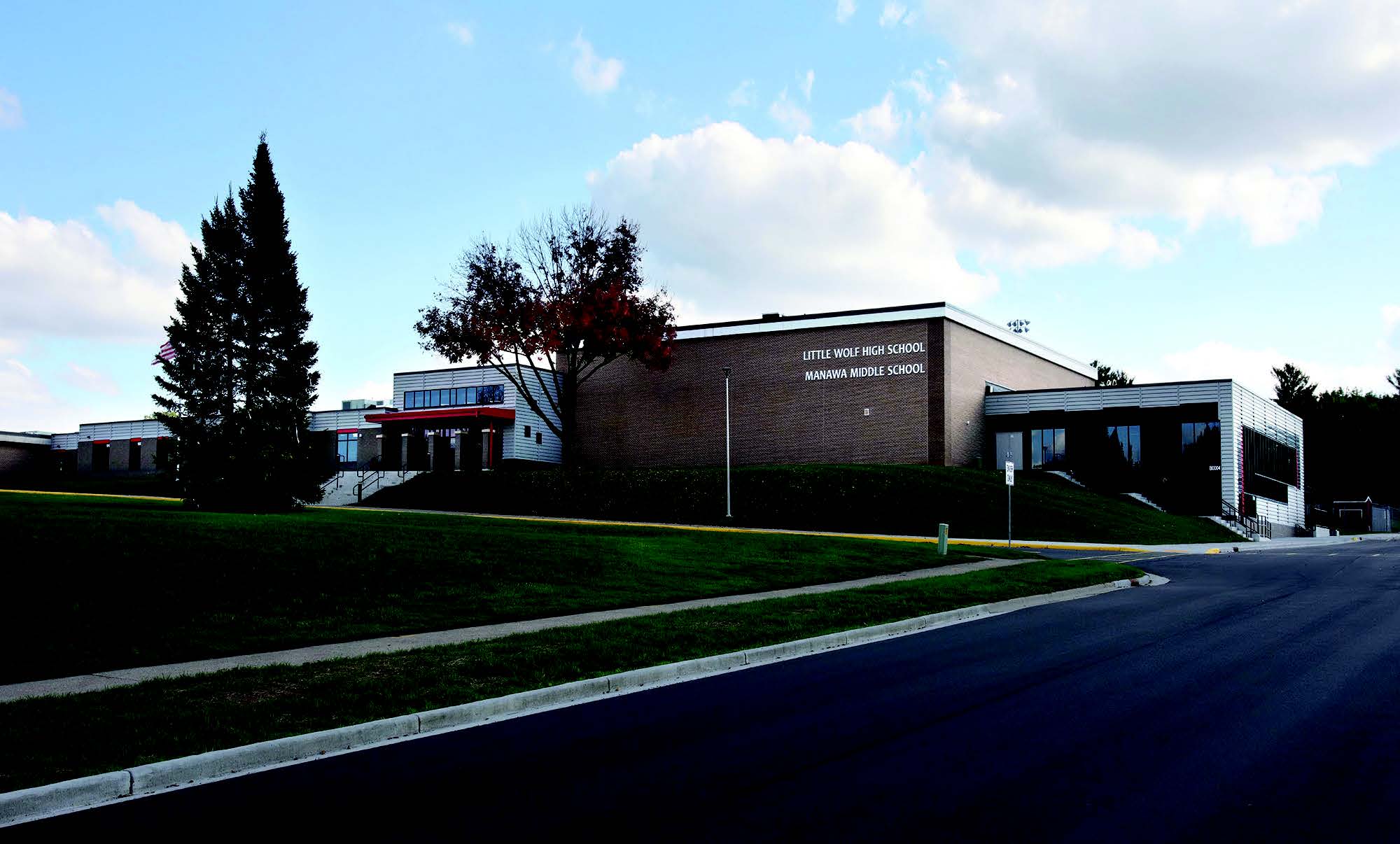 (Courtesy of Hoffman Planning, Design & Construction)
The multi-facility project for the School District of Manawa featured the addition of a two-story fitness center to the existing high school as well as the creation of a true middle school within the building.
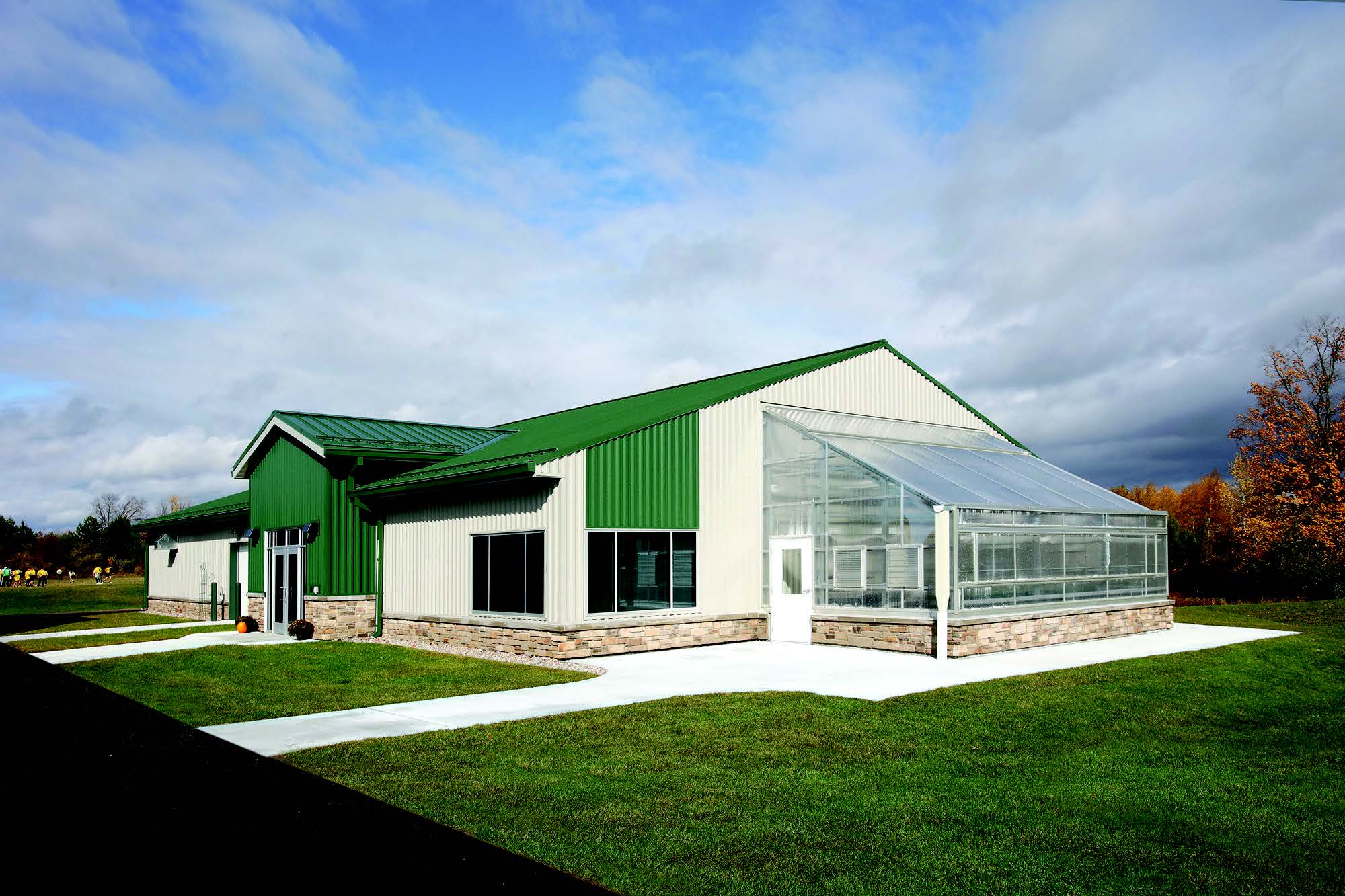 As part of their referendum projects, the Wittneberg-Birnamwood School District added a new 7,200 square foot agricultural education building on their high school campus.
As districts interview prospective architectural, engineering, and construction partners, they should be sure the conversation isn’t about the perception of taking a collaborative approach. It is vital that the district hire a team with a demonstrated track record.
Contact the firm’s past clients to learn how collaborative the potential partners truly are. Take the time and ask tough questions. The project is expensive and will affect students, parents, teachers, and faculty for years to come. Districts must put the best and the most experienced team on the field to make the project successful.
Illustrations of Benefits
A great example of the advantages of an integrated approach is a recent undertaking at Wittenberg-Birnamwood School District in Wisconsin. The project incorporated a new 7,200-square-foot agricultural education building, enhancements to the tech education area to give more attention to career training, and additions and renovations to the district’s two elementary-middle schools and its high school.
Thanks to the IPD approach, the final cost was $1.3 million under the $13.1 million preconstruction estimate. In addition, it was possible to deliver needed updates and improvements that were not initially in the scope of the project, such as replacing corridor ceilings and upgrading to efficient LED lighting at both elementary-middle schools.
Bonuses were a new maintenance garage, a renovated locker room at the high school, and upgraded bathrooms and physical education storage.
A second example is a project for the School District of Manawa in central Wisconsin. Completed in September 2020, the project showcased the establishment of a middle school within the existing junior senior high school building, a new administration area, and a new two story fitness center connected to the high school.
Supplementary features of the project included a new parking lot and bus turnaround at the elementary school, as well as classroom remodeling, playground renovation, and mechanical systems upgrades.
The final investment was $11.4 million, contrasted with the $12 million preconstruction estimation. The savings allowed the district to expand the project’s scope and replace deteriorating curbs and gutters around the high school and repave all high school parking lots and drives.
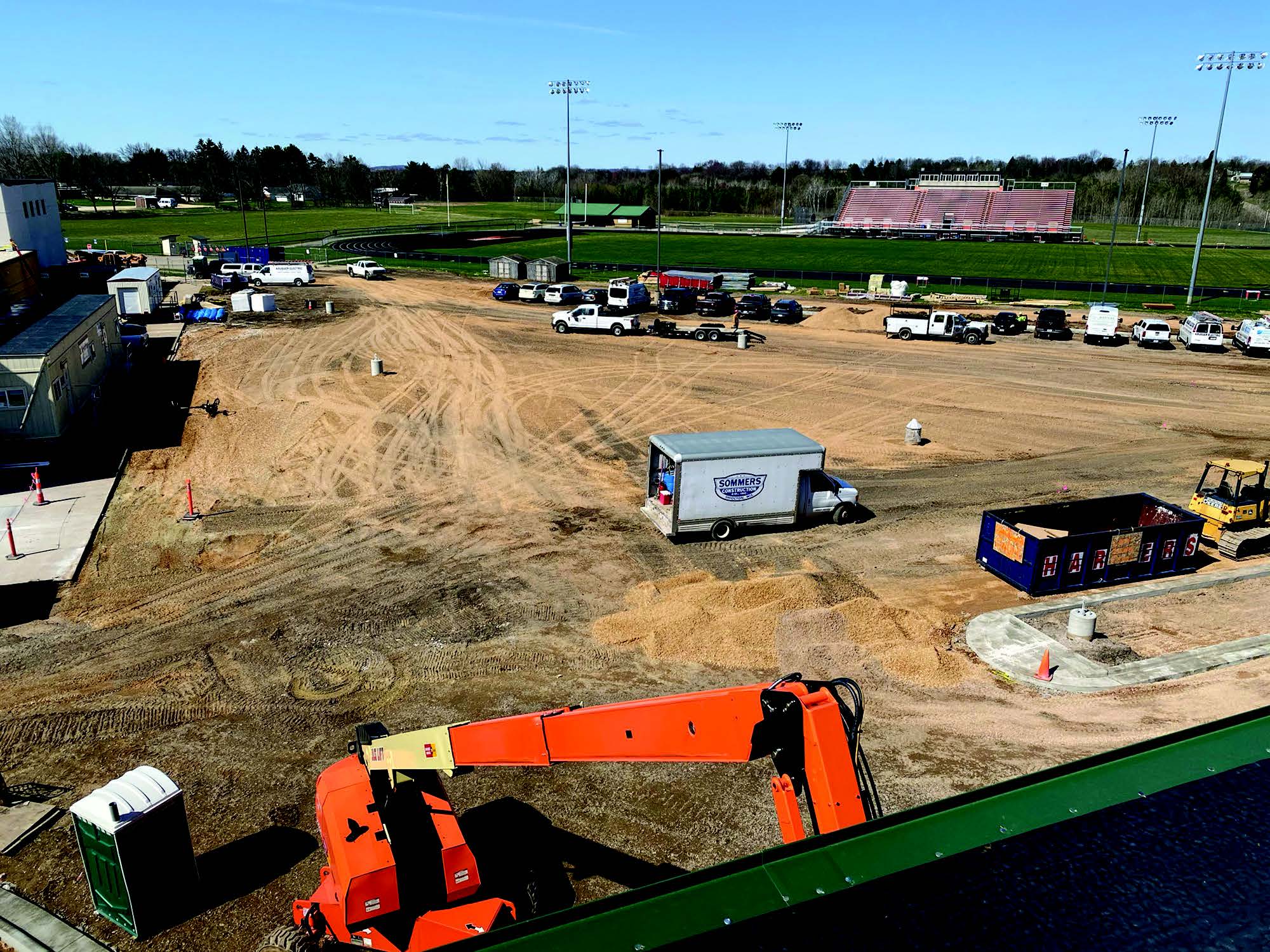 A key benefit with using an Integrated Project Delivery approach is engaging with subcontractors early on in the project. This early engagement allows them to get projects on their schedule well in advance, helping to avoid potential labor challenges.
Additional Community Rewards
By engaging with professional services providers for integrated project delivery or design-build, districts are likely to reap the rewards provided by improved collaboration, more cohesive communication, and a better understanding of construction schedules and costs.
This level of cooperation increases the prospect of discovering viable occasions to enhance the scope of work, giving school districts more for their money and ensuring on time project delivery.