In response to the claim that they had “too much on their plate,” we distributed a district-wide survey to collect data on initiatives underway at each grade level to determine how teachers and administrators ranked the effectiveness of the current initiatives.
This rudimentary survey asked participants to identify the contact person for each initiative, the population served by the initiative, and what they would consider a successful implementation.
As educators, we have good intentions, but we often inundate classrooms with disjointed and untested supports to ensure the success of our programs and initiatives.
It was quickly apparent that everyone did not share an understanding of initiatives, nor did we have consistent implementation across buildings and grade levels. The survey results were cluttered with a laundry list of every resource every teacher used in a given school year, making it difficult to interconnect those resources, let alone determine their impact on student achievement.
Our goal was to assess the district’s current situation; however, the unintended consequence of the survey was that we united teachers and principals against central-office leaders by validating that they indeed had “too much on their plates.” And it was our fault. One principal even asked us to refrain from using the term “initiative” since it now had a negative connotation.
Rebranding is common in education, but that principal’s request resonated with our team. The term “initiative” had negative connotations in our district because we called everything an initiative. Our list of reported initiatives included names of textbook and software companies and all district professional development offerings; even testing made the list. Some respondents considered the collection, analysis, and use of student assessment data to be an overbearing initiative.
To bring some organization to the nearly 170 reported initiatives, we decided to start at our core mission and work our way out.
Connecting to Your Vision
Mission and vision statements are required reading for all new district employees, but those well-crafted declarations are just words on a poster if we fail to connect them to our daily activities. As we worked to organize initiative inventory results, we looked for common themes and how they might relate to our already-established goals.
We discovered that many survey responses regarding initiatives could be traced back to the district’s vision to “increase academic achievement.” Other vision areas of note were professional growth, community connections, and social-emotional learning.
Using these vision components as a base, we attempted to partition the data further, but we still struggled. The classrooms appeared to be a turbulent sea of activity, disconnected from the calm elegance of a vision statement.
It was then that we realized the fundamental misunderstanding regarding initiatives. The administration defined “initiative” as an action to improve a situation, but the survey respondents reported items, not actions.
Redefining Initiatives
Rather than replace the term “initiative,” we agreed to sharpen our communication with teachers and principals about what initiatives are.
If we began with the vision to “increase academic achievement,” an initiative (act to improve the situation) might be “provide high-quality core curriculum.” So what do we do with all the other items on our list?
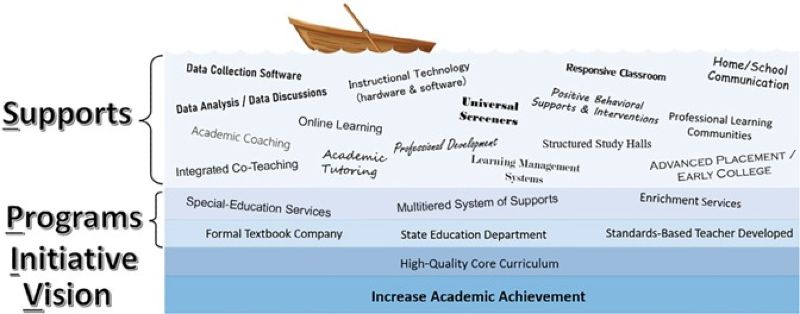 Figure 1. Defining initiatives and supports.
Figure 1 illustrates how we used the Vision as the base and the Initiative just above it. The larger and more turbulent portions of the water are the seemingly endless programs and supports used in buildings and classrooms to promote the initiative of a high-quality core curriculum.
To personalize the learning experience, we provide varying core curriculum Programs for our special-education students, general-education students on the cusp of success, and gifted and talented students who require a more rigorous program. The water churns with all the Supports that we provide for those programs.
Prioritizing Supports
The model of Vision > Initiative > Programs > Supports gives us a more refined picture of what we are doing each day to support students’ growth. As educators, we have good intentions, but we often inundate classrooms with disjointed and untested supports to ensure the success of our programs and initiatives. Although some of these supports are valuable, overprescribed resources can lead to student and teacher burnout.
Considering the number of supports teachers and principals can identify, “I have too much on my plate” is a valid statement. However, are all of those supports necessary? Which supports work best? How do we know? How many of those supports were put on their plate, and how many were requested by administrators in buildings or classrooms?
A comprehensive program/support inventory will demonstrate what you are doing, but to measure the return on these investments, ask these questions:
• What initiative and vision component does that program/support target?
• What are the direct and indirect costs of this program/ support?
• Who is the target population best served by this program/support? How many students are affected?
• What would the successful implementation of that program/support look like?
• What data (qualitative and quantitative) have been collected to demonstrate success?
As public education changes, districts will be required to make greater gains with fewer resources. An initiative inventory is a necessary first step in conducting an academic return-on-investment study, but it will also highlight you as an impactful leader.
Recognize that everything on the plate can be so overwhelming that personnel may be tempted to abandon the initial survey results and even rebrand the term “initiative.” However, navigating through the choppy waters will bring awareness to shortcomings and lead to implementing only those programs that have a high return on investment.