1. Review Roles and Responsibilities
Conduct individual interviews with staff to clarify what people actually do versus what their job descriptions say. Pay attention to duplicated efforts or tasks that no longer make sense in the current workflow. Examine all job functions, work processes, and the ebb and flow of peak workload levels. Seek input from administrators, support staff, and building-level personnel regarding appropriate workload distribution and staffing levels.
2. Ask the Right Questions
When reviewing job duties, tasks, and responsibilities, consider:
3. Benchmark Against Peers
Compare staffing levels and job functions with other school districts to identify gaps, redundancies, or best practices worth adopting. (See Table 1 below as an example.)
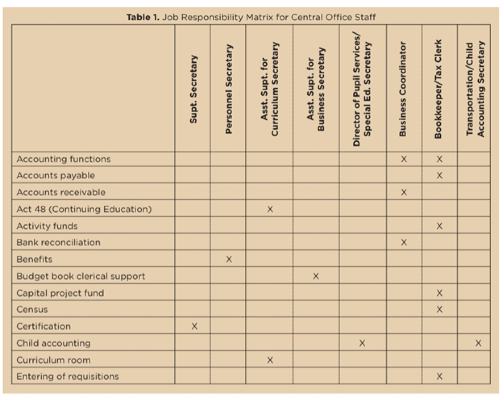 Table 1. Job Responsibility Matrix for Central Office Staff (Credit: ASBO International November 2009 School Business Affairs Magazine)
4. Communicate Often and Informally
Communication is an important part of successful implementation. Beyond formal meetings, encourage unstructured conversations with staff via one-on-one or small group meetings and other informal information-gathering sessions. These informal check-ins can uncover concerns, build trust, and facilitate a smoother implementation of any required changes.
5. Adjust and Automate
Use findings to reassign responsibilities, reduce duplication, and automate repetitive processes. Even small steps—like upgrading office equipment or improving workflow systems—can make a noticeable difference.
The Bottom Line
By systematically and thoroughly examining roles, gathering broad input, and communicating throughout the process, school business officials can create a more efficient, well-organized central district office.
Overall, this process can serve as a “do-it-yourself” model for any district team seeking to examine their business operations from the ground up.