In the wake of the pandemic, many districts lack the systems to hold both leaders and employees accountable for high performance and, as a result, learning gaps persist, employee attendance remains below historical averages, and behavioral issues among disengaged students are growing.
Overworked school and district leaders struggle to provide meaningful feedback for professional growth to employees, relying on infrequent or inconsistent feedback that is disconnected from the district’s strategic goals. The costs to the system – in terms both of budget and staff effectiveness – can add up quickly.
A Model for Strategic Supervision
To confront these challenges, we need a model that will use employee supervision and evaluation to promote system-wide improvement and a culture of high performance – a model for strategic supervision.
What is strategic supervision? It is purposeful planning, actions, and mindsets that:
- Value and promote a culture of high performance.
- Align practices with the district’s strategic plan.
- Treat and prioritize supervision as an essential tool for district improvement.
- Embed robust supervision within all district operations and units.
- Create and foster collaborative conversations about professional practice.
Simply put, effective leaders place a strong value on high expectations and feedback for growth for all staff, and this requires a systems approach to supervision that is tied to overall district goals. As James Clear noted in his best-seller Atomic Habits, “Goals are about the results you want to achieve. Systems are about the processes that lead to those results.”
The district supervision plan should not be just a function of the “minimum” number of interactions specified in most labor contracts; it should be an ongoing improvement system integrated into the strategic plan.
Strategy 1: Value and promote a culture of high performance.
Because school districts are human service organizations, the caring school environment often fosters an avoidance of difficult personnel conversations, resulting in what has been called “the culture of nice.” This culture can hinder high performance. Symptoms of this culture include:
-
Discussion of performance metrics, fiscal accountability, employee efficiency, position control and other data often is absent from individual, department and team meetings.
This culture can result in problems going unaddressed and, ultimately, diminished quality in the service to students, families, and other constituents. Moreover, this tendency has been exacerbated in the post-pandemic era, as leaders’ attention, energies, and staff development focus have shifted to emotional wellness, work-life balance, and equity initiatives.
While this emphasis has been critical to student and staff recovery after lengthy school shutdowns, it has often come at the expense of time focused on our primary mission: continuous improvement on behalf of students. It takes courage for leaders – especially less experienced ones – to overcome the natural tendency of schools to focus on “nice” talk, and instead to create a culture where professional growth conversations are normalized.
Strategy 2: Align practices with the district’s strategic plan.
The alignment of employee supervision with the strategic plan starts with the school board’s long-range strategic improvement goals and priorities and is backward-designed from there: The strategic goals inform school and department improvement plans, which then determine the goals of principals, directors, and other supervisors, and ultimately department and individual employee goals. All of these are then monitored and assessed through the supervision cycle.
Strategic goals can then inform supervisors’ observations of employees’ work and the feedback provided. This vertical alignment, as illustrated for the instructional program in Figure 1, is critical to the improvement of professional practice and, ultimately, performance outcomes and attainment of strategic goals, and can be applied to school finance and all district operations.
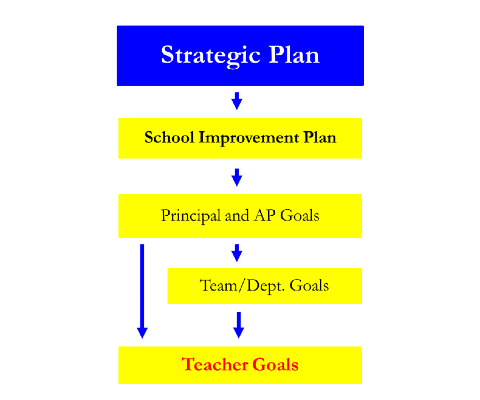 Figure 1. Alignment of district and school goals for improvement in the instructional program.
Strategy 3: Treat and prioritize supervision as an essential tool for improvement.
Some key components of a strategic supervision plan include:
-
Brief, informal visits and conferences about the work, rather than just formal “events,” such as an annual evaluation conference.
Too often, supervision and evaluation are treated as a compliance item to check off the leader’s lengthy to-do list, not as an ongoing conversation about improving practice. The district supervision plan should not be just a function of the “minimum” number of interactions specified in most labor contracts; it should be an ongoing improvement system integrated into the strategic plan.
Superintendents and boards of education must recognize the importance of effective supervision practice and make it a priority, and then set that expectation for school and department leaders. Business managers and human resource officials can help by ensuring that supervisors in all district departments – most of whom are not educators – are trained in effective personnel management practices, including how to provide timely, actionable feedback for improvement that is tied to strategic goals. Every interaction and conversation is an opportunity for feedback.
Strategy 4: Embed robust supervision within all district operations and units.
Although the main focus of strategic supervision is on instructional employees and programs, it can be applied to other personnel groups as well, including business and operations functions. As a former superintendent used to remind our leadership team, the district’s priorities are everyone’s priorities! Establishing a system of goal setting, frequent check-ins, feedback, monitoring and follow-up, as well as robust annual evaluations with specific suggestions for improvement, provides a higher level of accountability.
As Lou Pepe shared in a 2023 article in personnel. Pepe noted that supervisors who fail to address performance issues “often fail to capture the negative impact on the team and ignore the obligation to address the inappropriate actions of the individual.”
Strategy 5: Create and foster collaborative conversations about professional practice.
One of the key shifts required to implement strategic supervision is to change mindsets among managers as well as employees – to create a culture where supervision and feedback are not an occasional, one-time “event” to be approached with anxiety and reluctance, such as a visit to the dentist, but instead are part of a continuing conversation about professional growth.
For non-instructional personnel, this feedback cycle must be ongoing throughout the year, encompassing all aspects of an employee’s work – including their attendance, conduct, and collegiality – and responsibilities that support organizational improvement.
Operational directors can model this approach on the supervision cycle illustrated in Figure 2. For example, in supervising bus drivers, instead of relying on “drive-by” supervision or a once-a-year observation, strategic transportation directors make the time to have frequent conversations with employees and teams so they can monitor and follow up on previous feedback.
This approach promotes changes in practice that advance the department’s goals and inform opportunities for collaborative professional learning, such as how to support students’ character development and bus behavior.
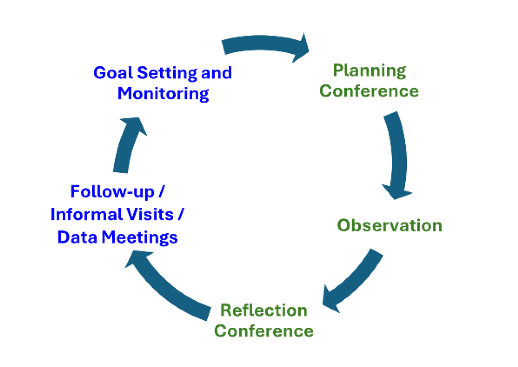 Figure 2. Employee supervision and feedback cycle.
Normalizing Growth Conversations
In summary, it takes courage for administrators — especially those who are new to their role — to avoid getting trapped in the “culture of nice” and to create a school environment where professional growth conversations are normalized and routine, all adults are held accountable, and every interaction is treated as an opportunity for learning. It is up to district and school leaders to foster the systems and culture that allow this to happen.