Full Insurance Coverage
Most school districts opt for fully insured coverage, meaning the district uses an insurance broker to negotiate a premium payable to an insurance carrier who manages the account. All issues/concerns regarding individual claims are managed by the broker. The insurance carrier undertakes the financial risk (premiums paid – claims paid = over/under) rather than the district.
Advantages of full insurance coverage include:
- There is no risk in overage of claims paid.
- The district does not need to have reserve monies put aside.
- The coverage is budget-friendly in that there is a set premium for the entire year; coverage can be for multiple years.
- A broker manages any claims issues and negotiates renewals on behalf of the district.
Disadvantages of full insurance coverage include:
- Premium increases can have a negative impact on the budget.
- Utilization of plan coverage may be less than expected.
- The district is held to carrier risk, margin charges, and state taxes.
The Self-Insurance Option and More
One option for districts looking to utilize budget dollars more efficiently is self-insurance. With self-insurance, the district, working with consultants, is responsible for managing/paying health insurance claims. This is beneficial if the district's employees are underutilizing the components of the plan and overpaying for healthcare premiums. In terms of self-insured, the profit margins (both good and bad) belong to the district.
A framework of self-insurance includes the district collaborating with multiple consultants, such as a health center consultant, claims payments, stop/loss carrier, prescription, dental, vision, and overall broker of record.
Unlike with full insurance coverage, the district must have stop/loss insurance and self-fund a reserve for claims incurred but not reported, equivalent to two to three months of activity. One advantage of having a mandatory reserve fund is to take advantage of earning interest on the money that can also be utilized in other areas of the budget. In addition, these costs could be offset by the fact that the district is not paying the carrier risk, margin charges, and state taxes.
Finally, the district could be exempt from any state legislative changes for healthcare.
Another option for the district is to join a joint health insurance fund comprised of multiple districts pooling their resources for favorable rates. This fund offers an opportunity for the district to participate in decisions related to its management, as a formal board comprised of fund members is required to meet.
With self-insurance, the district, working with consultants, is responsible for managing/paying health insurance claims.
Tables 1, 2, and 3 offer examples of how the bottom line for a 600-employee school district may be affected by the insurance coverage plan chosen.
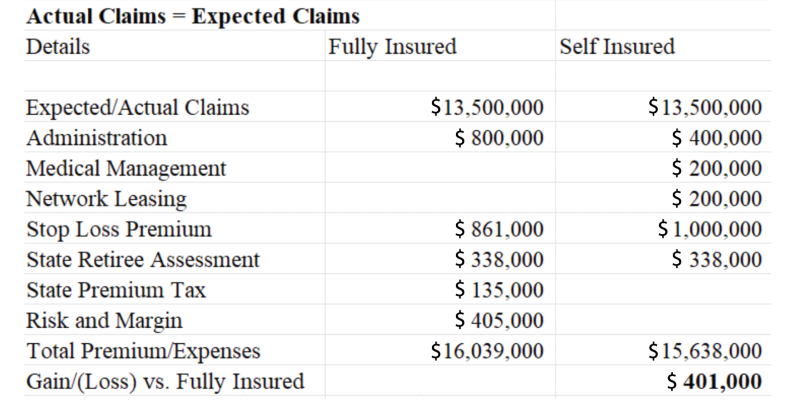 Table 1. Actual Claims = Expected Claims — A Comparison
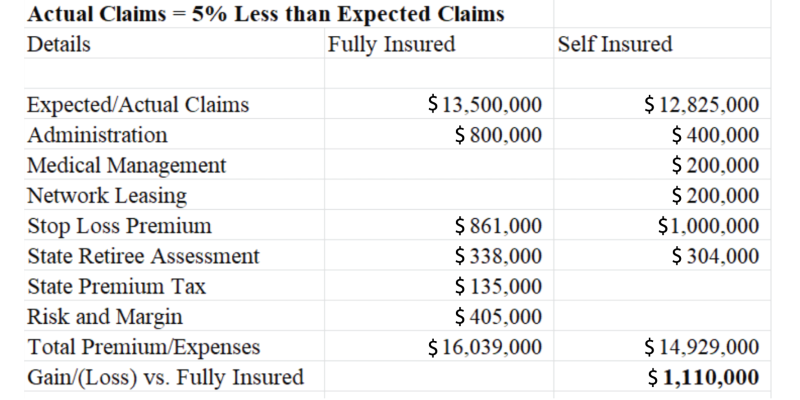 Table 2. Actual Claims = 5% Less than Expected Claims — A Comparison
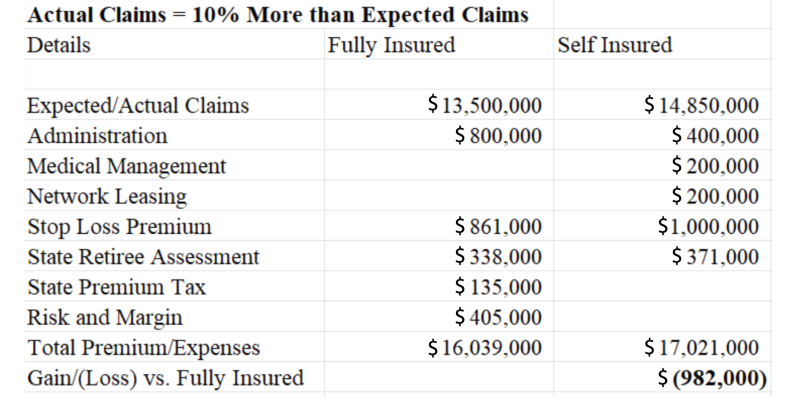 Table 3. Actual Claims = 10% More than Expected Claims — A Comparison
The three examples present key considerations for a district approaching current or future budget shortfalls and a changing population.
A potential obstacle to implementing self-insurance may arise if the district administration/board members believe it is too much of a risk or investment. Opening discussions with key individuals can enable SBOs to explore this option in full circle with support.
If the district moves forward with self-insuring, there may be a time in the future when the plan is not working to the district’s benefit. Unexpected increases in utilization can cost the district possible unbudgeted monies (Table 3). Claim payment exceptions are the district’s decision, not the carrier's; however, if the district wishes to have the carrier, leaders must understand that it will result in an additional fee. Fully insured carriers may not be willing to provide a quote if you can't supply consistent data for calculating premiums/assessing risk.
Executive Summary
If you are considering self-insuring, these points should get you started:
- Initiate discussions with higher-level administration and board members. If self-insurance is not well-received, you may need to table the opportunity for now.
- Speak with SBOs at other districts that are self-insured. Ask all the framework questions (who/what/when/where/how) related to the operations and what the future looks like for the fund.
- Speak with the professionals. Health insurance brokers know the market, know the trends, and are willing to assist the district in exploring this option.
In these unpredictable times, a switch to a self-insured plan may provide financial relief and better management of the district’s health insurance. The information provided here may help you determine if it is the right time for your district to explore this option.
Author’s Note: This article focuses on employer-based health insurance coverage and may not apply to international schools.
Special thank you to James T. Finn, CLU, senior vice president of Brown and Brown, a global insurance brokerage firm.