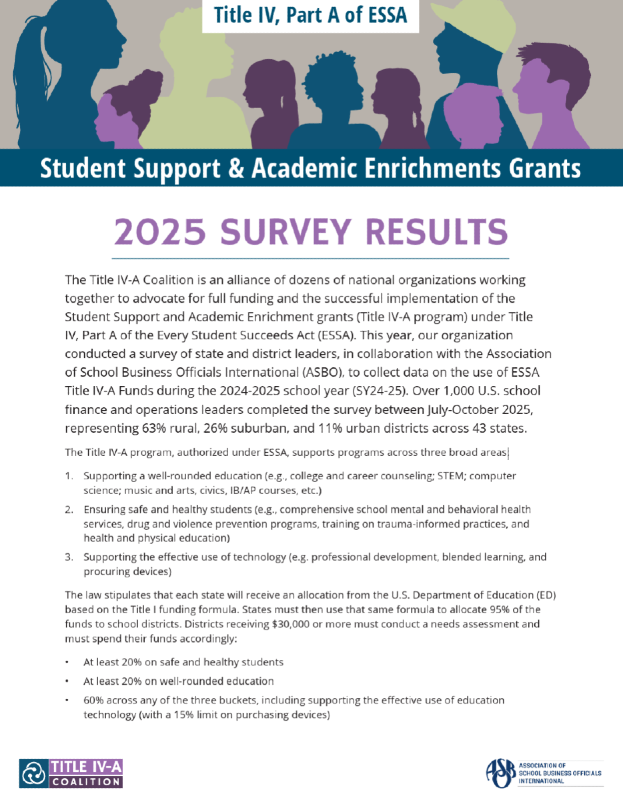
Source: Title IV-A Coalition. ASBO International and the Title IV-A Coalition released a summary of key findings in a February 2026 report.
Key Findings from the Field
-
Well-Rounded Education: 56% of districts used funds to expand STEM and computer science offerings, while 29% invested in accelerated learning programs, and 29% supported music and the arts to drive student engagement.
- Safe and Healthy Students: Mental health remains a top priority, with 36% of districts investing in school-based mental health services. Additionally, 30% of respondents directed funds toward bullying and violence prevention, and 29% spent funds on integrated systems to support student academic success.
- Effective Use of Technology: Rather than just buying hardware, 29% of district leaders used funds for blended learning strategies and computer-based assessments. Nearly one in four respondents invested in supporting teacher collaboration (24%) and personalized learning programs (23%).
While an overwhelming 78% of respondents value Title IV-A's unique spending flexibility to meet local needs, nearly two-thirds (61%) report that low funding levels remain a primary barrier to delivering essential student supports through the program.
Practical Takeaways for District Leaders
School business leaders seeking to make the most of their Title IV-A allocations may want to consider these investment strategies based on the survey results.
- Lean Into Blending and Braiding: Nearly half (48%) of district leaders surveyed said they blended and braided their Title IV-A funds with other federal, state, or local resources. By coordinating these funds with other federal Title funds and with state or local funds for similar purposes, districts can create more sustainable and comprehensive programs.
- Optimize for Flexibility: For districts receiving less than $30,000 (roughly half [48%] of respondents), the law does not require a formal needs assessment or meeting the 20% spending requirements across different categories. If your allocation is less than that amount, use that flexibility to fill specific, high-impact gaps that other grants might not cover.
- Address the Whole Child Through Academic Integration: The survey shows a growing trend of using funds to support well-rounded curricula to also meet a district’s social-emotional learning goals. For example, using music and arts funding to promote problem-solving and engagement is a dual-purpose investment that supports both academic achievement and student well-being. Identify opportunities to address more than one learning goal to maximize the grant investment.
- Focus Technology on Instruction, Not Just Devices: With a 15% statutory cap on device spending for many districts, strategic leaders are focusing their Title IV-A technology dollars on training educators on how to use technology to improve instruction. Consider identifying opportunities to address professional development needs through this program too.
Title IV-A is more than just a line item; it is an opportunity to innovate and expand the programs that make schools vibrant and whole, especially since ESSER funding has expired and districts are seeking alternative funds to sustain critical initiatives.
Advocate for Stronger Title IV-A Funding
expiredIf this program is important to your school district, let Congress know. Elected officials need to understand how federal dollars for Title IV-A and other programs are making a difference for students and schools, and school business leaders’ stories matter. District testimonies about the program can make a major difference for lawmakers as they work on federal appropriations and decide whether to increase or cut education program funding. Share why Title IV-A is important to your schools, how the program’s flexibility is beneficial for addressing a variety of student needs, and why strong funding is needed–especially as districts are continuously being asked to do more with less.