For the 2021–2022 school year, the first year of the strategic plan’s implementation, programs within two areas took center stage: (1) student growth and achievement and (2) stewardship of resources.
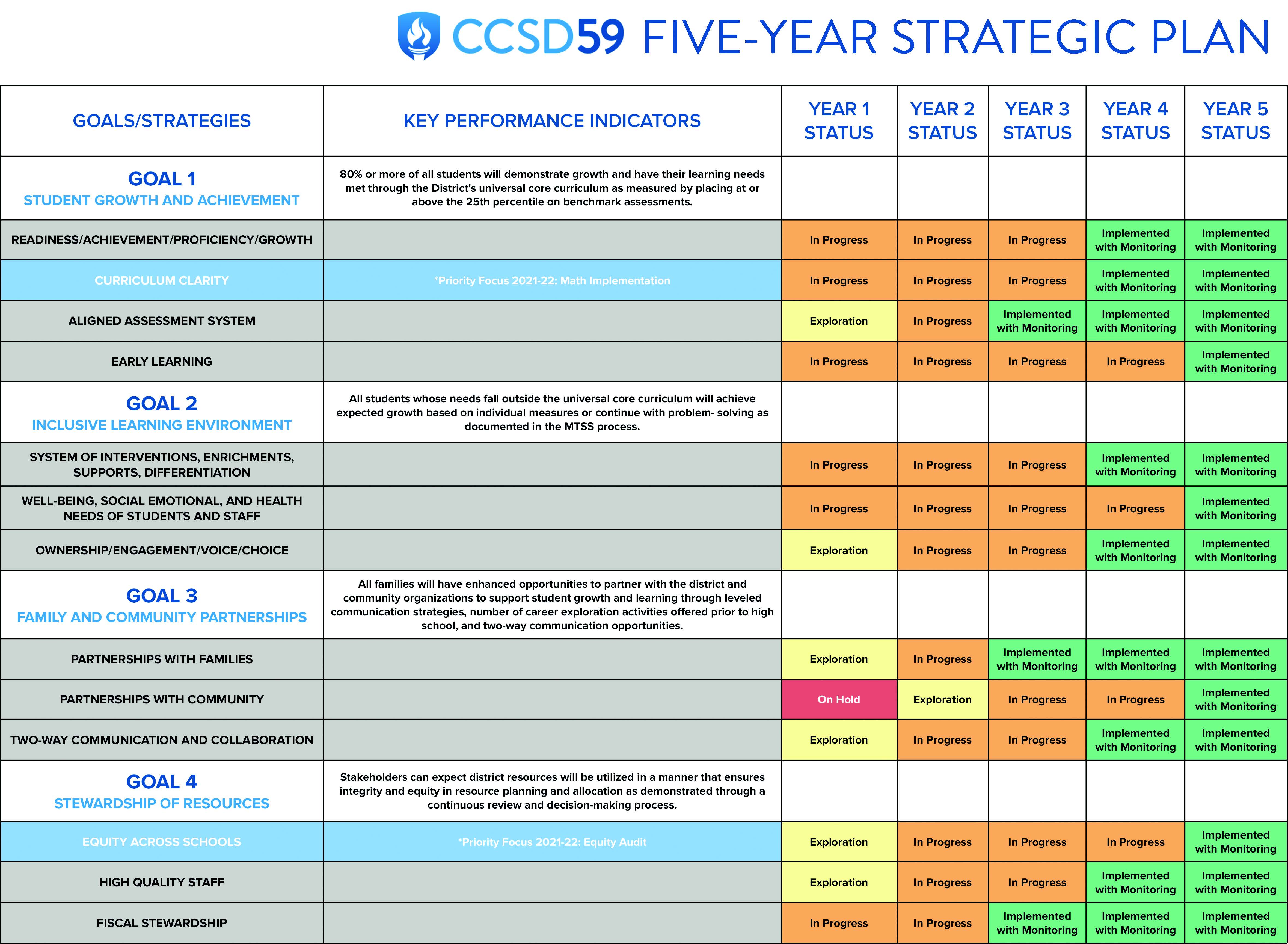 In late 2019, Community Consolidated School District 59 in Elk Grove Village, Illinois, worked with the Consortium for Educational Change to develop a strategic plan.
Student growth and achievement. A curriculum implementation framework guided the district through the first of a three-year implementation plan for a new universal math resource. The district shared highlights of the new math program through newsletters, video messages, and social media (see, for example, www.ccsd59.org/illustrative-math-faq).
The board’s Curriculum Resource Committee, which includes parents and community members, helped create a survey for families about the math resource implementation.
Stewardship of resources. As part of an equity opportunity review, the district designed and administered a request for proposal for a third party to assess practices, programs, and policies through an equity lens. The goals of the project were to:
- Better understand the ways in which CCSD 59 provides equitable learning environments and the areas of opportunity for development and growth.
- Use comprehensive data to prioritize areas of inquiry and develop a long-term approach for addressing the most critical equity-related needs of the district while managing costs.
- Strengthen internal capacity and ongoing equity efforts through a dedicated equity advisor, a curated resource library, and professional learning sessions.
An additional facet of the review was the evaluation of a dual-language program, which the district assessed through teacher, administrator, and parent focus groups, as well as classroom observations and a review of district data and curricula.
One final piece of the initiative was a boundary study in which a third party analyzed student demographics, facility use, and transportation.
Communicating Processes
The district uses social media, board meetings, and committee groups to communicate information about the strategic goals and implementation processes. As a result, stakeholders recognize what the organization values and understand that all actions are tied to the four strategic areas. This transparency defines the district work as valid and relevant for students’ success.
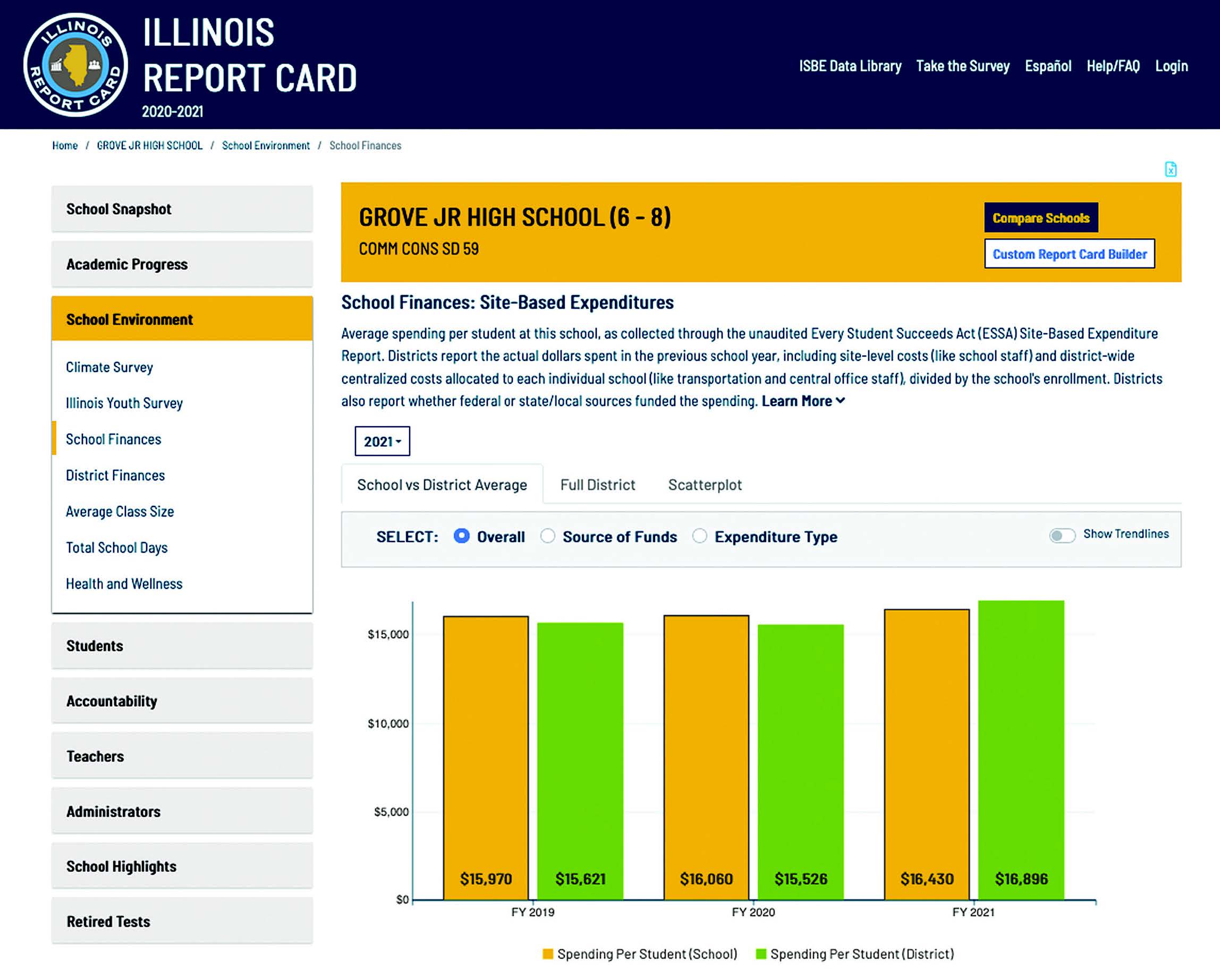 caption: Example of a site-based expense report: https://www.illinoisreportcard.com/school.aspxschoolid=050160590041010&source=environment&source2=sber
In addition, the district developed an online dashboard that provides a transparent and user-friendly way for the public to monitor the district’s progress. Under the guidance of the superintendent, senior leadership created key performance indicators, such as increased test scores or maintenance of a particular fund balance. Data and results are shared publicly in real-time. In essence, the dashboard tool drives decisions and reflects performance.
Another piece that promotes community relations is a detailed 10-year facilities plan. The document—developed in response to community questions about facility management and spending—outlines the planning and execution of district facilities. This plan has been a tremendous help in explaining to stakeholders why facility work is necessary. Additionally, the document ensures that building projects, which tend to be pricey, will not surprise anyone when the time comes to fund them.
The district is also implementing a town hall-style meeting that gives the administration an opportunity to share information about current and future projects and allows stakeholders to ask questions in a more casual atmosphere. Participants can make inquiries during the meeting or submit them via a website.
Communicating how the district aligns its resources to strategic goals is key to building trust and promoting community buy-in. Explaining the what and the why is imperative, especially when it comes to communicating about finances, as clear, transparent communication demonstrates fiscal responsibility and stewardship of resources.