In 2024, we will observe the 70th anniversary of the landmark Supreme Court case Brown v. Board of Education of Topeka. In the interim, federal laws against discrimination have included Title VII of the Civil Rights Act of 1964, the Americans with Disabilities Act (ADA) of 1990, and Title IX of the Education Amendments of 1972.
Although research, data, school reforms, and federal laws have affected our journey, the real change is made within our schools. The distribution between discussing and taking action toward equity has not been equally weighted.
To take action, to make sustainable changes, and to create policies take commitment and support from the board of education, the central office, and all stakeholders.
The Webster Groves School District (WGSD) in Webster Groves, Missouri, has received this level of support, which has allowed the district to make systemic changes. The WGSD moved from the “equity talking” phase to the “equity action” phase in 2001 when it recognized the critical step to begin the journey of becoming an inclusive and equity-minded school district.
Equity work must not be the responsibility of one office or one person; it must be embedded across the district. Here are several actions we took as a district, and continue to take, to demonstrate that doing this work is a journey. You will see in these initiatives the impact of collaboration by human resources, operations, the learning department, the board of education, and the director of diversity, equity, and inclusion.
Director of Diversity, Equity, and Inclusion
My position—director of diversity, equity, and inclusion—was created in 2020 after Webster Groves’ March for Change. This position reports directly to the superintendent and focuses on all matters related to diversity, equity, and inclusion for all district stakeholders.
When the board unanimously approved the position in July 2020, John Simpson, WGSD’s superintendent, said, “We believe that each of us in the school system—all 900 staff members—is responsible for being champions of diversity, but we would benefit by having someone whose role is exclusively for championing it.”
Board of Education
The Board of Education has supported our becoming an inclusive school not only in words, but also in actions:
In 2017, the board passed the Equity Resolution (www.webster.k12.mo.us/Page/21), which acknowledged historic discrepancies in learning and made a commitment to an environment that eliminates performance discrepancies and ensures that everyone feels safe. Equity has been embedded in the structure and implementation of collaborative learning teams and professional learning teams.
Equity has been embedded in the structure and implementation of collaborative learning teams and professional learning teams.
In 2021, the board passed Policy ACI: Equity, which states that it will not tolerate racist or biased acts, commits to eliminating inequitable practices, and holds staff accountable for participating in professional development and training.
 courtesy of Webster Groves School District, Missouri
Equity work is embedded across the Webster Groves School District.
Operations
Pam Frazier, chief financial officer, has made several changes that reflect the district’s commitment to equity and inclusion:
Winter break leave. The maintenance and facilities staff were allocated additional paid vacation days during winter break while the district was closed.
XBE. The Building Advisory Committee proposed a new format for construction bids to encourage XBE participation, which is participation by small businesses as well as minority-owned, women-owned, disability-owned, and veteran-owned businesses. The proposal is now being reviewed by the Board Policy Committee.
ADA accessibility. The district improved ADA accessibility by adding elevators, entrance ramps, and secure vestibules.
Technology. After the COVID-19 pandemic, the district continues to provide free hot spots and student devices. In addition, middle school students and nineth-graders have one-to-one computing.
Human Resources
Assistant Superintendent of Human Resources Sandy Wiley-Skinner has implemented several systemic changes that have positively affected the school district.
Bias training–hiring process. Before all district-level interviews, Wiley-Skinner leads the search committee in mandatory training on implicit bias and how it may affect the interview process. The training includes reviewing résumés, creating equity questions appropriate to all phases of the interview process, and evaluating candidates before making a final decision.
Diversity event. The Shares Event is held in January to attract and build relationships with prospective staff members of color. Superintendent Simpson welcomes participants and shares our commitment to equity, and teachers and administrators of color volunteer to meet with the participants and hold honest conversations about their experiences working in WGSD. Interviews are also included in the event.
Equity standards. All employees will be covered by the standards in 2022–2023 evaluations and will be evaluated on at least one of the six equity standards. This process is led by Wiley-Skinner and includes the assistant superintendent of learning, an elementary school principal, and the director of diversity, equity, and inclusion.
Staff diversity. Annual meetings are held with administrators to ensure that their staffing population is representative of the student population. Administrators are encouraged to have a diversified panel of candidates for all positions.
Teacher of Color group. The TOC group was created to provide support, networking, and engagement opportunities for staff members of color. In 2022, the TOC leadership team decided they wanted to create a more inclusive environment for all staff members of color, and changed their name and focus to the Staff of Color group.
Learning Department
The assistant superintendent of learning, Jason Adams, and I worked together to make the following systemic changes in staff professional development.
Professional Development
Noncertified staff participate in a two-hour anti-bias, anti-racist (ABAR) session within the first year of being hired and in a two-hour equity session each year thereafter.
New teachers and certified staff follow a four-year equity professional development plan that includes ABAR, social justice, cultural competency, and culturally responsive teaching and the brain.
New administrators study a three-year equity professional development plan that focuses on ABAR, social justice, and cultural competency.
Embedding Equity
CLT/PLT. Equity has been embedded in the structure and implementation of collaborative learning teams and professional learning teams.
Curriculum revisions. An equity lens applied to curriculum reviews has resulted in the K–8 social studies curriculum using multiple perspectives (www.webster.k12.mo.us/Domain/323).
Curricular and noncurricular program reviews. This required component of the report to the board focuses on equity: How do our current practices and researched best practices support our district’s commitment to diversity, equity, and inclusion? What changes can be made to further the efforts of this program in supporting our district’s commitment to diversity, equity, and inclusion?
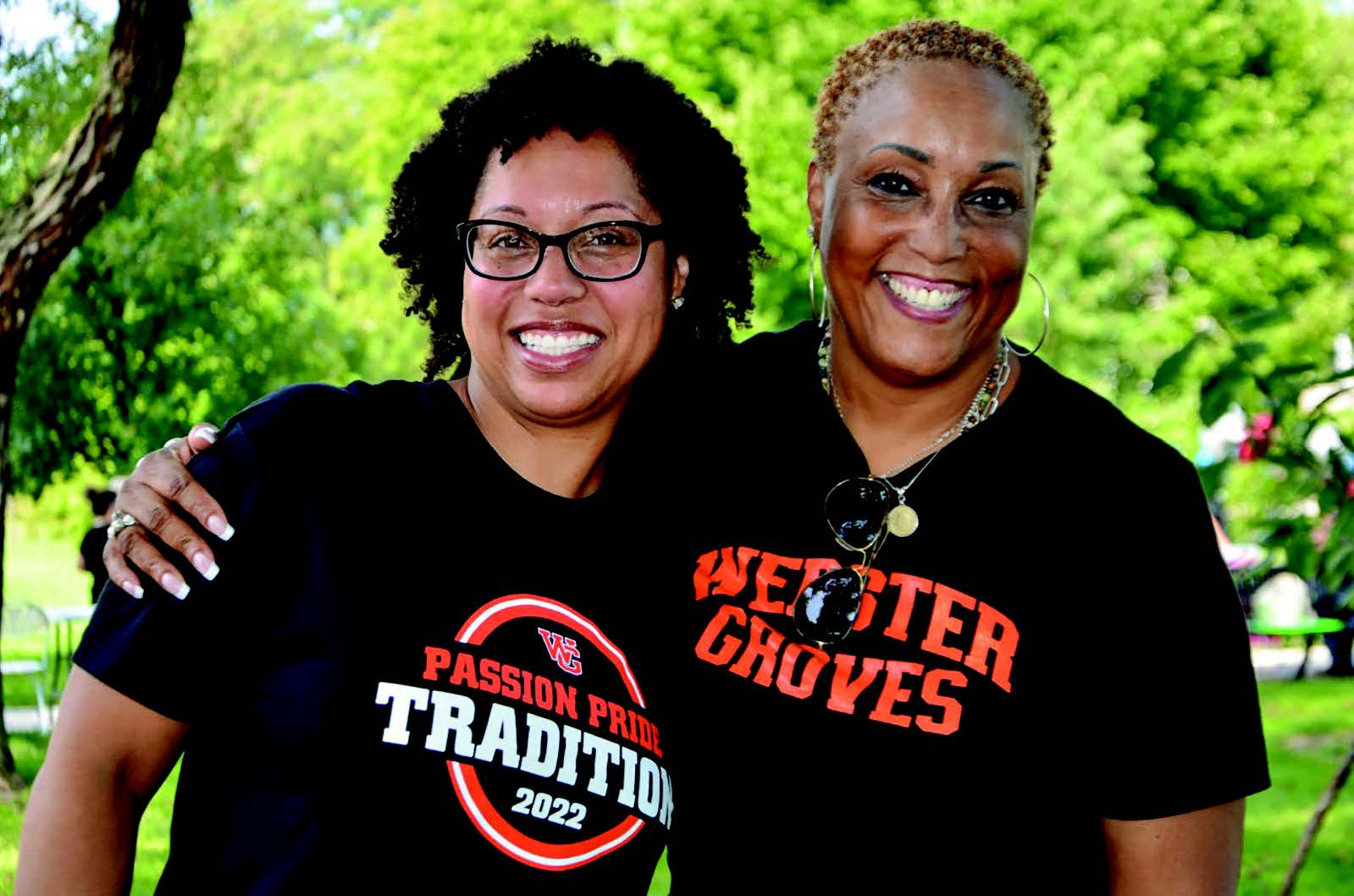 courtesy of Webster Groves School District, Missouri
Shane Williamson, left, is the director of diversity, equity, and inclusion in Webster Groves, Missouri.
Equity in Action Committee
The name of the Equity in Education Committee, created in 2001, was recently changed to Equity in Action. The EIA Committee is composed of staff, students, families, administrators, and community members. The EIA Committee reviews data, policies, structures, systems, and practices that further the social, emotional, and physical well-being of all students. The committee, led by the director of student learning and me, advocates for specific actions to increase equitable outcomes for all students.
Collaboration and Commitment
The students we serve guide our work and our commitment to be an inclusive school community that values everyone and eliminates inequitable practices. We have been able to discuss, analyze, and implement changes, policies, and procedures because we have the support of our board, superintendent, central office, and school community.
Collaboration remains a key element in progressing from “talking” about equity to “demonstrating” equity. It truly takes a holistic approach and commitment from everyone to implement equity-minded actions in their sphere of influence.